

To prevent ice dams on your roof, keep the roof cold. Give melted snow a clear path off the building. Seal attic air leaks, add the right insulation, keep vents open, and clean gutters. A good ground-level snow plan also helps water move away from the property.
Winter damage often starts with a small problem, and a warm attic may melt roof snow. A blocked gutter may hold water at the edge, while a buried drain may leave meltwater with nowhere to go. When the next cold night comes, that water can freeze again.
At NE Services, winter planning looks at the whole site, not just where a plow pushes snow. Roof edges, roads, doors, drains, and snow piles affect one another. A smart plan keeps them working through many freeze-and-thaw cycles.
What Is an Ice Dam?
An ice dam is a ridge of ice near a roof edge. Snow melts on a warm part of the roof, then runs down to the colder eave and freezes. More water backs up behind the ice and may enter walls or ceilings.
The National Weather Service’s ice-dam guidance explains this melt-and-freeze cycle. The agency says water can work under shingles after several cycles. Snow on the roof, heat from the building, and cold outdoor air can all play a part.
Did You Know? Large icicles can warn you about uneven melting. They do not prove that water has entered the building. Check for ceiling stains, wet attic insulation, peeling paint, or ice that keeps forming in the same place.
Why the Roof Edge Freezes First
Heat can leak from rooms into the attic and warm the main roof area from below. The roof overhang sits past the heated wall, so it stays colder than the roof above the rooms.
Meltwater reaches that cold edge and freezes. Each new trickle can make the ridge larger. Gutters full of leaves or ice may slow the flow even more.
Why Chipping the Ice Can Make Things Worse
Do not attack an ice dam with an axe or metal shovel because sharp tools can break shingles, gutters, and flashing. A torch or open flame can start a fire, and fast heating may send more water toward a weak part of the roof.
These methods only treat the ice you can see. They do not fix the heat leak or blocked flow that caused it.
How to Prevent Ice Dams Before Snow Falls
The best long-term step is to limit heat loss into the attic. Ask a trained insulation or building pro to check for leaks around lights, pipes, wires, fans, and the attic hatch. Seal those gaps before adding more insulation.
Good venting also helps the roof stay cold. Soffit vents bring cold air into the attic. Ridge vents let air leave near the roof peak. Both must be open and sized for the building. Insulation should not block the path near the eaves.
Pro Tip: Check the attic after a cold night. You may see frost on nails or damp roof boards. Warm spots can point to a leak before an ice dam shows up outside.
Clean Gutters and Downspouts
Remove leaves, sticks, and old dirt before the first freeze, then check that each downspout is open. Water should leave the roof area and keep moving away from the building.
A downspout should not empty onto a low walkway. That can trade a roof problem for a sheet of ground ice. State officials also tell owners to clear clogged gutters before winter storms.
Check Common Trouble Spots
Look at valleys, low slopes, skylights, roof additions, and each place where two roof lines meet. These spots may hold snow or drain slowly.
Watch for loose shingles, cracked seals, and damaged flashing. Ask a roofer to inspect a leak before winter. A small repair is easier to plan before snow covers the roof.
Plan the Whole Property, Not Just the Roof
A clear roof does not mean the full property is safe. Meltwater may cross a parking lot, pool by a door, or collect beside a wall. A good winter plan covers snow storage, drainage, walking paths, and room for later storms.
NE Services takes this full-site view through its snow removal and ice management services. The team handles commercial plowing, parking lots, driveways, and sidewalks. It also offers sanding, de-icing, and seasonal plans for scheduled clients.
Pick Snow-Storage Areas Early
The closest open corner is not always the best place for snow. A pile can take away parking spaces. It can block a driver’s view or cover a fire hydrant. It may also send water across a busy path when it melts.
Mark drains, hydrants, loading areas, ramps, and utility gear before winter. Keep piles away from those spots and leave room for more than one storm.
Did You Know? A frozen pile can release a lot of water during a quick thaw. The runoff may cross a shaded area. If the air turns cold again, that wet spot can become slick before the rest of the lot.
Keep Drains and Flow Paths Open
Good property drainage helps control rain and melted snow. Catch basins, surface drains, swales, and sloped ground need a clear path. Water cannot enter a drain that sits under a large snow pile.
Check low spots during the first thaw and write down where water stays after the rest of the site dries. Those wet spots may freeze during the next cold night.
Pro Tip: Take photos while snow is melting. The photos show where water travels and where it stops. They give your team a simple map for the next storm.
Know When Plowing Is Not Enough
Plowing moves snow to another part of the site. It does not remove snow from the property. After several storms, piles can narrow lanes, hide signs, reduce parking, or block drains.
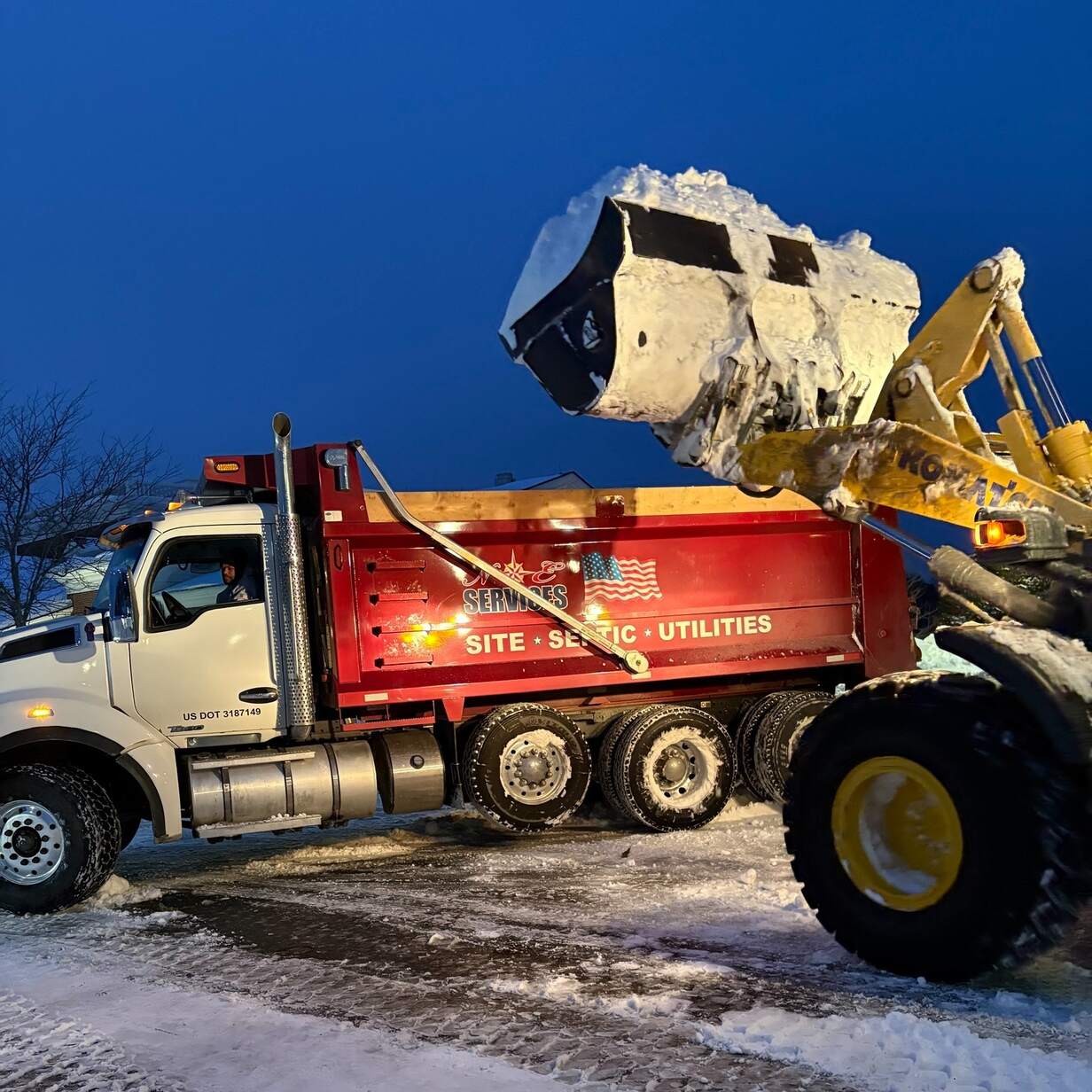
Snow trucking helps when the site runs out of storage space. Loaders place snow in trucks for off-site hauling. This opens parking spaces and flow paths again. NE Services also offers materials hauling and trucking for its wider site-work operations.
Set a hauling trigger before winter. It might be a blocked drain, poor sight line, or a set number of lost spaces. A clear trigger helps the property manager act before access gets tight.
Handle Roof Snow Safely
Roof work comes with fall, wire, and building risks. Ice makes those risks worse. Massachusetts officials advise owners to hire trained help for dangerous roof work. Their roof snow-removal safety guide warns against open flames and heavy gear on a roof.
A roof rake may remove some snow from a pitched roof. Use it from the ground, stay clear of wires, and do not scrape shingles bare.
Leave the building if the roof sags, cracks, or makes odd sounds. Do the same if doors or windows become hard to open. Call emergency or building officials for help. Do not climb up to inspect the danger yourself.
NE Services’ public service details cover snow and ice work at ground level. Roof repair, attic work, and roof snow removal need a trained building or roofing pro.
Build the Winter Plan in September
September gives you time to walk the site before storms set the schedule. Clear gutters, check drains, and have roof trouble reviewed. Mark doors, walks, parking, hydrants, loading zones, and safe snow-storage areas. Set plans for plowing, de-icing, checks after each storm, and snow hauling. These steps keep water moving and protect access during a South Shore winter.
If you need ground-level snow removal, ice control, or snow trucking in Kingston, Plymouth, or nearby South Shore towns, contact NE Services today before the winter schedule fills. The team can review your property and discuss a clear, practical seasonal service plan.
Frequently Asked Questions
What causes ice dams on a roof?
Ice dams form when heat melts snow on one part of a roof while the eave stays cold. The water runs down, freezes at the edge, and blocks later water from leaving the roof.
Can gutters cause ice dams?
Clogged gutters do not cause the warm and cold roof areas that start an ice dam. They can slow drainage and hold ice at the eave, so clean gutters still lower the chance of water backing up.
Should I remove an ice dam myself?
Avoid sharp tools, open flames, ladders, and walking on an icy roof. A trained roofing or building pro can check the ice, roof, and attic without adding damage or putting you at risk of a fall.
When should a property arrange snow trucking?
Arrange snow trucking when piles take parking, block sight lines, cover drains, or leave too little room for the next storm. Set that trigger before winter so the property manager can act before access becomes tight.