

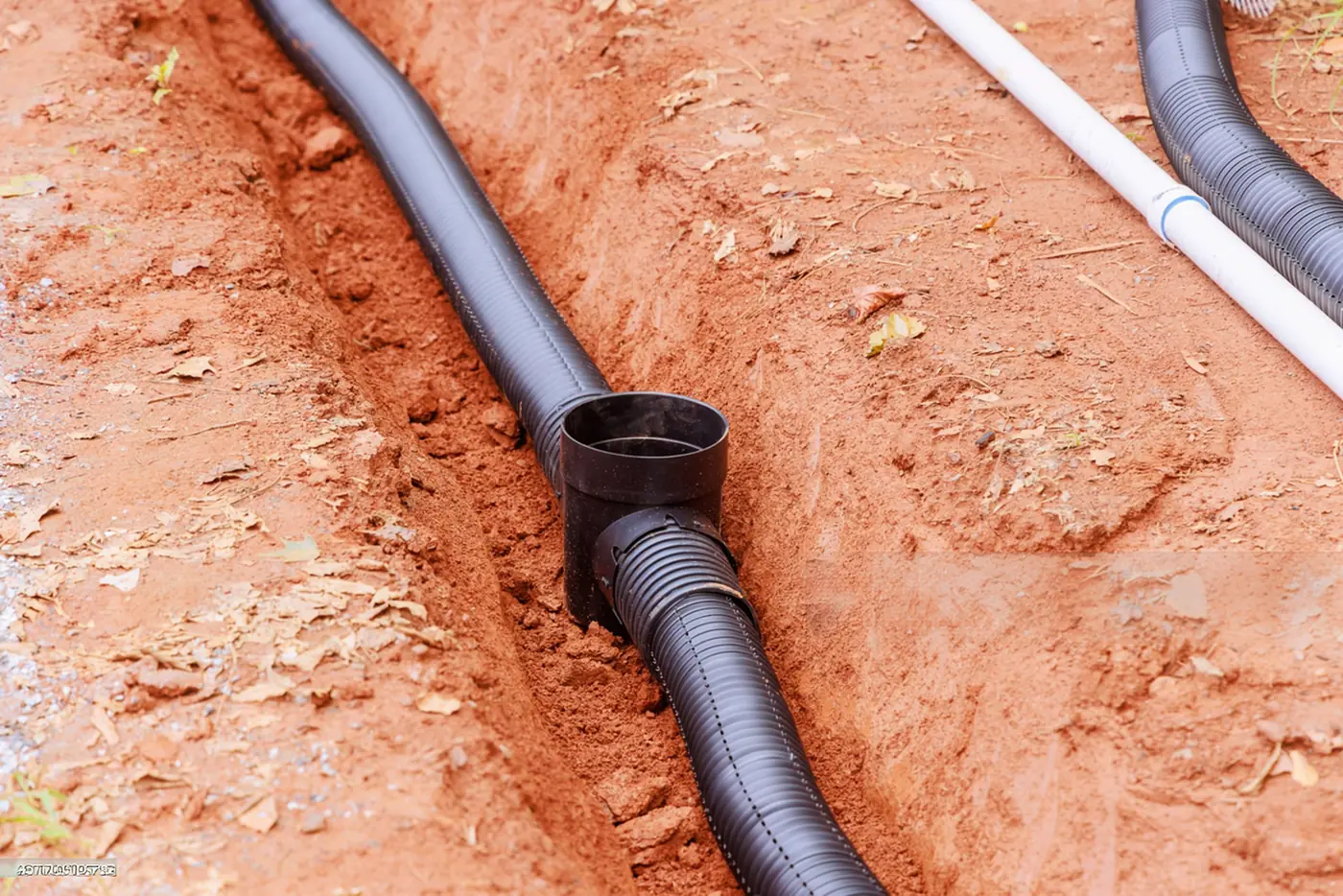
If your yard has a drainage problem, the fix depends entirely on where the water is coming from — not just where it’s pooling. Fixing poor yard drainage starts with identifying the source: surface runoff, subsurface groundwater, or poor grading that directs water toward the wrong areas. Most homeowners treat the symptom and miss the cause, which is why the same wet spot keeps coming back every storm season.
We see this pattern every summer across Plymouth County. A homeowner fills in a low spot, the next storm fills it right back up. The water didn’t go away — it just has nowhere else to go. Understanding what’s actually happening underground is what separates a fix that holds from one that lasts one season.
Why Yard Drainage Problems Don’t Fix Themselves
Standing water is always looking for a path. When soil is compacted, slopes are wrong, or subsurface water has nowhere to drain, water will find the lowest point and sit there until it evaporates or slowly absorbs. In southeastern Massachusetts, clay-heavy soils make this worse — clay absorbs water slowly and holds it long after sandy or loamy soil would have drained.
August storms tend to be short and intense, dumping large amounts of rain in a short window. Even well-designed yards can saturate during a heavy storm, but a yard with a drainage problem stays wet for days. That’s the tell — how long after the rain your yard takes to drain, not whether it gets wet in the first place.
Did You Know? Compacted soil absorbs water significantly slower than healthy, aerated topsoil — and lawns that get heavy foot traffic or equipment use are especially prone to it. According to UMass Extension’s soil compaction research, compaction reduces water infiltration and percolation rates in ways that promote pooling and surface runoff rather than absorption. Properties graded with subsoil brought to the surface during construction are particularly at risk.
Grading: The Most Overlooked Drainage Factor
The slope of your yard controls where water goes before any drainage system gets involved. The general standard is a 2% grade sloping away from the foundation — roughly 2 inches of drop per 10 feet of run. Yards that have settled over time, or that were never properly graded after construction, often have flat or negative grades that direct water toward the house instead of away from it.
Regrading is one of the most effective drainage fixes available, and it’s also one of the most underused because homeowners don’t realize how much a subtle slope change affects where water ends up.
The Most Common Yard Drainage Problems and What Actually Fixes Them
Not every wet yard needs the same solution. Matching the fix to the actual problem is what determines whether a drainage project lasts.
Low Spots That Collect Water
A low area in the yard that consistently pools after rain is usually a grading issue. The right fix is filling and regrading that area so water flows toward a proper outlet — not just adding topsoil and hoping the grass fills in, which rarely holds.
Water Moving Toward the Foundation
When rainwater flows toward the house instead of away from it, you’re looking at a grading problem first and possibly a French drain or curtain drain second. A French drain installed along the foundation intercepts groundwater before it reaches the structure, but the surface grade still needs to direct runoff away from the house or the drain is working twice as hard as it needs to.
Pro Tip: Check your downspout extensions before spending money on drainage systems. Downspouts that terminate within 3 feet of the foundation are one of the most common causes of foundation-adjacent pooling — and extending them 6 to 10 feet away costs almost nothing compared to a full drainage installation.
Soggy Lawn That Never Fully Dries Out
A persistently wet lawn that doesn’t dry out even during stretches of dry weather usually points to a high water table or subsurface flow crossing the property. This is where a French drain or curtain drain intercepts that underground flow before it saturates the root zone. This type of drainage problem won’t respond to surface fixes — regrading alone won’t help if the water is coming up from below.
Erosion Channels in the Same Spots After Every Storm
When water consistently overloads the same areas and carves channels in the soil, the volume of runoff exceeds what the surface can handle. Solutions here often involve a combination of regrading, adding a catch basin or channel drain to intercept surface flow, and directing it to a proper outlet.
| Problem | Likely Cause | Typical Fix |
| Low spot pools after rain | Negative grade | Regrade and fill |
| Water near foundation | Flat or negative slope toward house | Regrade + French drain |
| Lawn stays wet in dry weather | High water table or subsurface flow | French drain or curtain drain |
| Erosion channels after storms | Runoff volume too high for surface | Catch basin + outlet pipe |
| Basement dampness after rain | Saturated soil against foundation | Interior or exterior drain tile |
What a Professional Drainage Assessment Looks At
When we assess a yard for drainage, we’re not just looking at where water pools — we’re mapping how water moves across and under the property. That means checking the grade at multiple points, probing soil type and compaction, looking at where impervious surfaces like driveways and patios are directing runoff, and identifying any existing drainage infrastructure that’s blocked or undersized.
Properties that also need site preparation work — regrading, topsoil brought in, or compacted subsoil broken up — often need that work done before a drainage system is installed, not after. Installing a drain in the wrong soil condition just moves the problem downstream.
Did You Know? In Massachusetts, drainage work within 100 feet of a wetland requires a Notice of Intent filing with your local Conservation Commission. According to Mass.gov’s Wetlands Protection Program, regrading and drainage alterations are among the regulated activities that require Commission approval before work begins. Plymouth County has a high density of wetland-adjacent properties, so this step comes up more often than most homeowners expect.
When to Call a Contractor vs. Handle It Yourself
Surface-level fixes — extending downspouts, adding mulch to slow runoff, filling minor low spots with topsoil — are reasonable DIY projects if the problem is minor. Anything involving excavation, gravel trenching, or connecting to an outlet point should be handled by someone who knows the local grade, soil conditions, and permitting requirements.
A drainage system installed without proper slope or at the wrong depth can make the problem worse. Water that’s intercepted but has nowhere to go just saturates the area around the drain instead of the area it came from. Proper land clearing and site prep before installation makes the difference between a system that lasts decades and one that fails in two seasons.
Frequently Asked Questions
How do I know if my yard has a drainage problem or just normal wetness after rain?
Normal post-rain wetness drains within 24 to 48 hours. If your yard is still soggy two or more days after a storm, or stays wet during dry weather, you likely have a drainage problem worth investigating rather than waiting out.
Can poor yard drainage damage my foundation?
Yes. Soil that stays saturated against a foundation wall creates hydrostatic pressure that can cause cracking, moisture intrusion, and long-term structural issues. Catching and redirecting surface and subsurface water before it reaches the foundation is far less expensive than foundation repair.
How much does it cost to fix yard drainage in Massachusetts?
Costs vary widely depending on the solution needed. Downspout extensions and minor regrading can cost a few hundred dollars. A French drain installation on a residential property in southeastern Massachusetts typically runs between $2,000 and $8,000 depending on length, depth, and outlet complexity.
Will fixing yard drainage kill my lawn?
A properly installed drainage system shouldn’t damage a healthy lawn. Excavation will disturb some turf, but that’s restorable. The ongoing damage from a yard that stays saturated — root rot, moss growth, soil compaction — is far worse for a lawn than a drainage installation done right.
Do I need a permit to install a French drain in Massachusetts?
It depends on the location. Work within wetland buffer zones — common across Plymouth County — requires a Conservation Commission filing. Your contractor should be able to tell you immediately whether your property falls in a regulated area.
Stop watching the same spots flood every August. Contact NE Services to schedule a yard drainage assessment and find out exactly what fix your property needs before the next storm hits.