

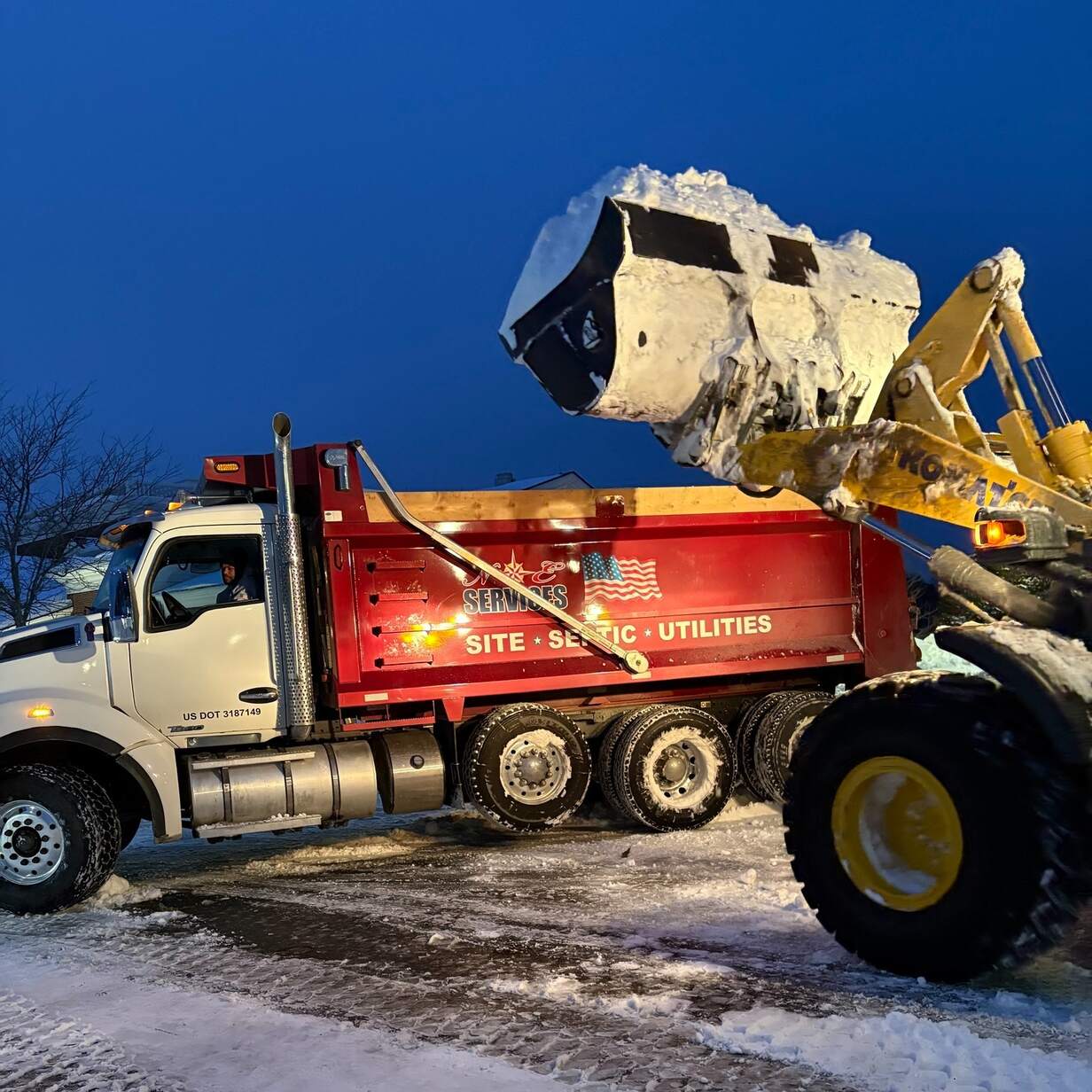
Commercial snow removal works best as a property plan, not a single plow visit. A contractor reviews the site, sets service triggers, clears routes, controls ice, manages snow storage, and removes piled snow when the lot runs out of room.
For a business, that plan covers more than the parking lot. Entrances, sidewalks, loading areas, fire lanes, ramps, drains, and accessible parking affect how people move through the property. NE Services provides commercial plowing, parking lot and sidewalk clearing, sanding, de-icing, seasonal contracts, and snow trucking across the South Shore.
What commercial snow removal includes
Commercial winter service usually combines several tasks. The exact mix depends on the property layout, storm conditions, and service agreement.
Site review and service planning
A contractor starts by reviewing the lot, drive lanes, entrances, sidewalks, ramps, loading zones, hydrants, drainage points, and places where snow can be stored. The review should also identify narrow turns, low-clearance areas, traffic patterns, and any features that could be hidden by snow.
The contractor and property manager then agree on service triggers. These may include a certain snowfall depth, freezing rain, a forecasted storm, or a request from the property manager. The agreement should state which areas are cleared, how ice control is handled, who is contacted, and what happens when snow piles fill the site.
Plowing, shoveling, and ice control
Plows open the main vehicle routes first. Crews then clear sidewalks, entrances, ramps, and other walking surfaces. Sanding or de-icing may be used where packed snow or freezing conditions create a traction problem.
Massachusetts winter safety guidance says businesses may need to clear walkways, entrances, ramps, and accessible parking. Local rules vary, so check the ordinances for your town.
Did You Know? A parking lot can look clear while a shaded walkway remains dangerous. Meltwater from a snow pile may cross the walking route and freeze again after sunset.
How a commercial snow plan works during a storm
A good plan follows the property from the first snow to the next thaw. It should not rely on one visit at the end of the storm.
Before the storm
Before winter, mark fire hydrants, drains, curb cuts, loading areas, accessible spaces, and snow-storage zones. Move portable items that could be buried. Confirm who can request extra service and how the contractor will communicate.
A pre-season site walk helps the contractor choose plow routes and avoid pushing snow into the wrong place. Snow that blocks a drain, sight line, or emergency route creates a second problem.
Pro Tip: Take photos of the property before the season starts. Use them to mark the intended snow piles, no-storage zones, and areas that need hand clearing.
During and after the storm
During a storm, the crew may make repeated passes instead of waiting for every flake to stop. That keeps routes open and reduces the amount of packed snow that later needs to be scraped or treated.
After the main snowfall, crews check entrances, sidewalks, ramps, drains, and low spots. Ice control is applied where needed. The property manager should also watch for new runoff, blocked sight lines, and snow pushed against doors or building walls.
OSHA winter-weather guidance advises employers to clear snow and ice from walking surfaces and spread deicer quickly after a storm. It also warns that roof snow removal involves separate fall, electrical, and structural hazards. A ground-level snow agreement should not be treated as roof-removal authorization.
Where should commercial snow be placed?
Snow storage is part of the plan from the first storm. A pile may reduce parking, block a driver’s view, cover a drain, narrow a sidewalk, or send meltwater across a busy route.
Choosing safe storage areas
A suitable storage area is away from fire hydrants, curb cuts, accessible parking, entrances, loading zones, drainage inlets, and sight lines. It should leave space for later storms. A property with limited room may need more than plowing.
NE Services explains that snow trucking becomes useful when piles take up parking, block sight lines, or create drainage problems. In that situation, loaders move snow into trucks for off-site hauling. The contractor may also coordinate the timing of removal so the work does not interfere with deliveries or peak customer traffic.
When snow trucking makes sense
Set the hauling trigger before winter. Common triggers include a lost number of parking spaces, a blocked drain, a pile that reduces visibility, or a forecast that leaves too little room for the next event.
Massachusetts environmental guidance recommends that businesses identify suitable upland snow-disposal locations and avoid areas that could threaten wetlands, water supplies, or other sensitive resources. Confirm the disposal plan before trucks are needed.
Did You Know? Snow piles can contain salt, sand, litter, and vehicle pollutants. When the pile melts, that material can move with the runoff, which is why disposal and drainage planning belong together.
How drainage affects winter service
Plowing and ice control cannot solve every winter hazard. Water flow matters too. A low spot, clogged catch basin, steep driveway, or poorly placed snow pile can turn a cleared surface into a sheet of ice.
The property’s drainage system should be reviewed before the first storm. Keep drains visible and accessible. Watch where water travels during the first thaw, then adjust snow-storage areas if runoff crosses a walkway or entrance.
NE Services also connects winter service with wider site work. Its snow removal and ice management service covers commercial plowing, parking lots, sidewalks, sanding, de-icing, seasonal contracts, and snow trucking. When a property needs hauling or related material movement, its materials hauling and trucking service is another relevant service route.
Pro Tip: Walk the property during the first thaw, not only after a storm. Note where snow melts, where water stops, and which surfaces refreeze first. Those observations can improve the next service visit.
How to choose a commercial snow contractor
Start with the property, not a generic package. Ask the contractor to review the site and explain how the service will handle vehicle routes, walking surfaces, accessible areas, snow storage, ice control, and snow hauling.
Questions to ask
- Which areas are included in each visit?
- What snowfall or ice conditions trigger service?
- How are sidewalks, ramps, curb cuts, and accessible spaces handled?
- Where will snow be stored during the first and later storms?
- When will snow trucking be recommended?
- How will the contractor communicate during a storm?
- Are seasonal contracts available for predictable winter planning?
The answer should match the property. An office, retail lot, apartment community, and municipal site can have different access and storage needs.
A seasonal agreement lets the property manager and contractor set the service scope before the first storm. Availability depends on storm conditions and scheduled clients, so October is a practical time to request a winter plan.
Frequently Asked Questions
How commercial snow removal works during a long storm?
Commercial snow removal may use repeated plowing passes while snow is falling, followed by sidewalk clearing and ice control after the storm. The exact timing depends on the service agreement, storm severity, property layout, and safe access for the crew.
Does commercial snow removal include sidewalks?
It can, but sidewalks should be listed in the service agreement rather than assumed. A complete plan should identify entrances, ramps, curb cuts, accessible parking, loading areas, and other walking routes that need hand clearing or ice treatment.
When does a business need snow trucking?
A business may need snow trucking when piles use too much parking, block sight lines, cover drains, narrow travel lanes, or leave too little room for another storm. Set the trigger before winter so the property manager does not have to make the decision during a storm.
Is roof snow removal part of commercial plowing?
No. Roof snow removal involves separate fall, electrical, and structural hazards. OSHA recommends planning that work separately, using trained workers and proper controls. A ground-level snow agreement does not authorize anyone to work on a roof.
Plan commercial snow removal before the first storm
Commercial snow removal is a chain of decisions: where vehicles travel, where people walk, where snow can be stored, how ice will be controlled, and when hauled removal becomes necessary. A site review before winter gives the contractor and property manager time to answer those questions while the property is clear.
NE Services serves commercial properties, residential communities, and municipal sites in Kingston, Plymouth, and surrounding South Shore communities. Contact NE Services to review your property, discuss seasonal snow management, and build a service plan before winter schedules fill.